What Are Dental Veneers?
Dental veneers are ultra-thin shells — typically 0.3 to 0.7mm thick — bonded to the front surface of teeth to improve their appearance. They can address almost every cosmetic concern: discoloration that doesn't respond to whitening, chips and fractures, uneven shapes, small teeth, gaps, and mild crowding.
Veneers (Urdu: دانتوں کے وینیرز) are sometimes confused with “caps” — a cap (crown) covers the whole tooth, while a veneer covers only the front surface. More on that difference below.
When designed well, veneers are completely indistinguishable from natural teeth. The key word is designed well — veneer work is as much an art as it is a science, requiring a deep understanding of dental aesthetics, facial proportions, occlusion, and material properties. This is precisely the domain of a prosthodontist.
"I already had veneers before but they looked completely artificial. Dr. Abdullah took my case with so much care, patience, and professionalism. Over two months, he redesigned my entire smile — today I finally have my perfect smile back. He is an expert in his field, incredibly skilled, and genuinely dedicated to his patients."
E.max vs Composite Veneers
We work with two veneer materials, and we're honest about where each fits. For long-term, highly aesthetic results we use E.max (lithium disilicate) ceramic, fabricated by trusted laboratories using E.max or Shofu ceramic. Composite veneers (bonding) are our economical, short-to-medium-term option — and a useful way to trial a smile design before committing. We do not offer zirconia veneers: the bonding protocol is unforgiving, and even when bonded well, zirconia does not match the natural aesthetics of E.max.
E.max Veneers
- Most natural, lifelike result
- Highly stain-resistant
- Lifespan of 8–10 years before overhaul
- Lab-fabricated for precision fit
- Minimal tooth preparation
- Can mask deep discoloration
- The long-term choice
Composite Veneers / Bonding
- More affordable option
- Often fewer visits
- Minimal to no tooth removal
- Easily repaired if chipped
- Shade fades within 2–3 years
- Ideal as a temporary or trial
- Less stain-resistant than E.max
Veneer Pricing in Lahore (2026)
Prices are per tooth and current as of July 2026; they may change over time. The more teeth treated, the more we reduce the per-tooth fee — we trim our margin to keep treatment accessible to our patients. The initial consultation is free; digital smile design and mock-ups are charged separately. You'll always receive a clear written estimate before any treatment begins.
Veneers vs Caps (Crowns): What’s the Difference?
In Pakistan, crowns are commonly called “caps.” The difference is simple: a cap (crown) wraps the entire tooth and is the right choice when a tooth is structurally damaged or heavily filled, while a veneer covers only the front surface, preserving far more natural tooth — ideal for closing spaces, masking discolouration, and reshaping otherwise sound teeth. Correct case selection matters more than the label: as a prosthodontist, Dr. Abdullah chooses whichever protects the most tooth structure for your case. See our crowns & bridges page for when a cap is genuinely the better option.
What Problems Can Veneers Fix?
Severe Discoloration
Tetracycline staining, fluorosis, and intrinsic discoloration that whitening cannot address.
Chipped Teeth
Restore fractured or worn teeth to their original shape and length.
Uneven Shape
Correct teeth that are too small, too short, or irregularly shaped.
Gaps & Spacing
Close minor gaps between front teeth without orthodontic treatment.
Mild Crowding
Improve the appearance of slightly misaligned front teeth cosmetically.
Complete Smile Redesign
Transform multiple teeth simultaneously for a fully coordinated aesthetic result.
⚠ Important: Veneers Are Not Always the Right Answer
Veneers are an irreversible treatment, and despite being marketed almost as a commodity, they remain exactly that — a treatment, recommended only where genuinely indicated. We don't sell the solution; we solve the problem. If you have crowding, overlapping teeth, a deep bite, or a grinding habit (bruxism), aligning the teeth first — often with clear aligners — usually gives a better, longer-lasting result than masking the issue with veneers. If whitening or alignment will serve you better with less irreversible treatment, that is what we will recommend. For an honest explanation of what veneers involve — including what happens to the enamel and the religious question many patients ask about — read our honest guide on what veneers actually involve.
The Veneer Process at Smile Hub Clinics
A complete veneer case at Smile Hub is typically five visits over 10–14 days. The initial assessment can be started remotely, which is what makes the timeline workable for visiting patients.
Free Consultation & Assessment
A thorough assessment of your teeth, gums, bite, and aesthetic goals. We discuss what's realistic, which teeth need treating, and the shade, shape, and size that will look most natural on you. This assessment can be started remotely (photos + a video call) for patients planning to travel.
Digital Smile Design & Mock-Up
We design your new smile digitally, then create a physical mock-up so you can see and feel the proposed result before any treatment begins. Nothing is irreversible at this stage — it's where we refine the plan together.
Minimal Preparation & Impressions
Using a minimal-prep approach, a very thin layer of enamel is conservatively reshaped under local anaesthesia. Digital scans or impressions are taken and sent to the laboratory, and temporaries protect the teeth while your E.max veneers are crafted.
Trial / Try-In
The finished veneers are tried in without permanent bonding. Shade, shape, fit, and your bite are all verified, and adjustments are made. We do not move forward until you approve the result.
Final Bonding
The veneers are permanently bonded, the bite is meticulously checked and adjusted, and everything is polished. For visiting patients we complete this well before departure, leaving a window for a final review before you fly home.
Why Choose Smile Hub Clinics for Veneers?
Prosthodontic Expertise — The Difference That Shows
FCPS Prosthodontist: Prosthodontics is the specialty of dental aesthetics and reconstruction. Dr. Abdullah's postgraduate training is specifically in designing and placing restorations that look, feel, and function like natural teeth.
Veneer redesign experience: We have treated patients whose previous veneers from other clinics looked artificial or didn't fit properly. Correcting poorly made veneers requires a higher level of skill — and it's a case type we handle regularly.
Full smile integration: A prosthodontist considers the entire occlusal system — how your teeth bite together, the wear patterns, the gum architecture. Veneers that look beautiful but compromise the bite fail prematurely. We design for longevity, not just aesthetics.
Patient-controlled process: Your feedback at the temporary stage drives the final result. We don't bond permanently until you are satisfied with the preview.
Honest case selection: If whitening or aligners will give you a better result with less irreversible treatment, we'll tell you. If veneers are right for you, we'll explain exactly why.
Veneers for Overseas & Visiting Patients
We regularly treat patients living abroad — often members of the diaspora visiting Pakistan, or those who want to replace older veneers (frequently zirconia) with natural-looking E.max. The result speaks for itself, and the value compared to UK, US, or Gulf pricing is significant.
How We Make It Work Around Your Travel
Plan before you fly: We start with a remote consultation — WhatsApp or video plus photos — so a treatment plan and a written estimate are ready before you commit or travel.
Completed within your visit: Most veneer cases finish within a 10–14 day stay. Ten days is comfortable; tighter timelines can sometimes be managed but carry more risk, which we'll always tell you about honestly in advance.
Finished early, with a follow-up window: We make sure everything is meticulously adjusted and complete your case well before your departure date, so there's time for a follow-up visit if needed.
Reassurance after you return: We stay reachable for guidance once you're home — and we have trusted colleagues in the US and UK who can step in for an emergency adjustment in a pinch.
Travelling for treatment? Read our full guide to dental treatment in Pakistan for overseas patients.
Recent Veneer Cases
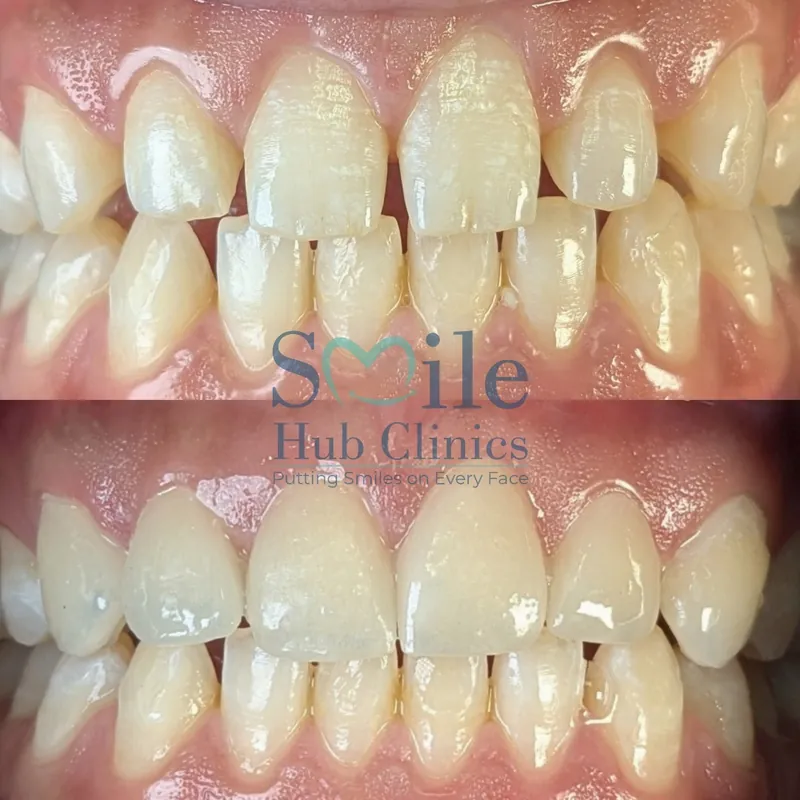
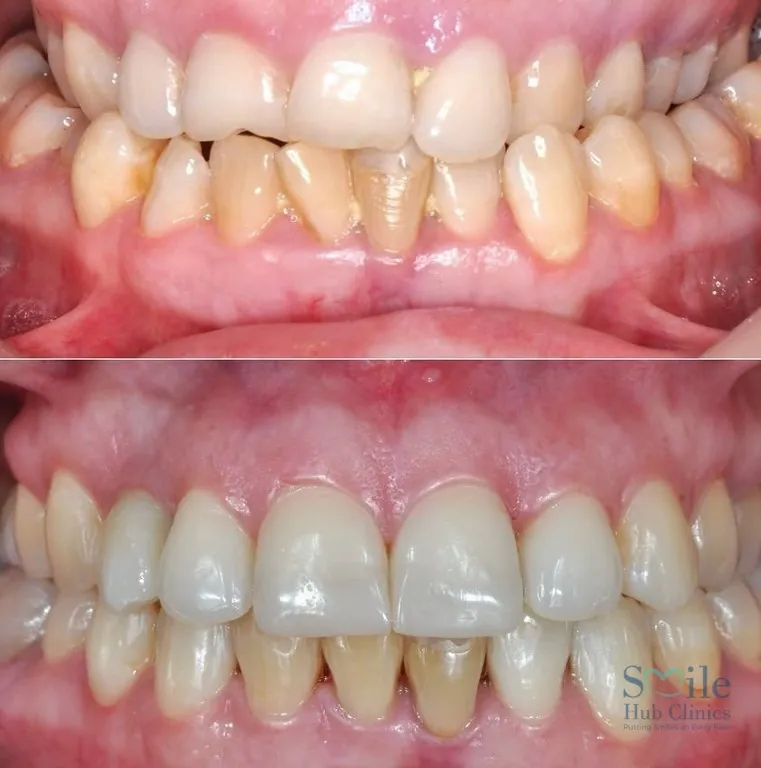
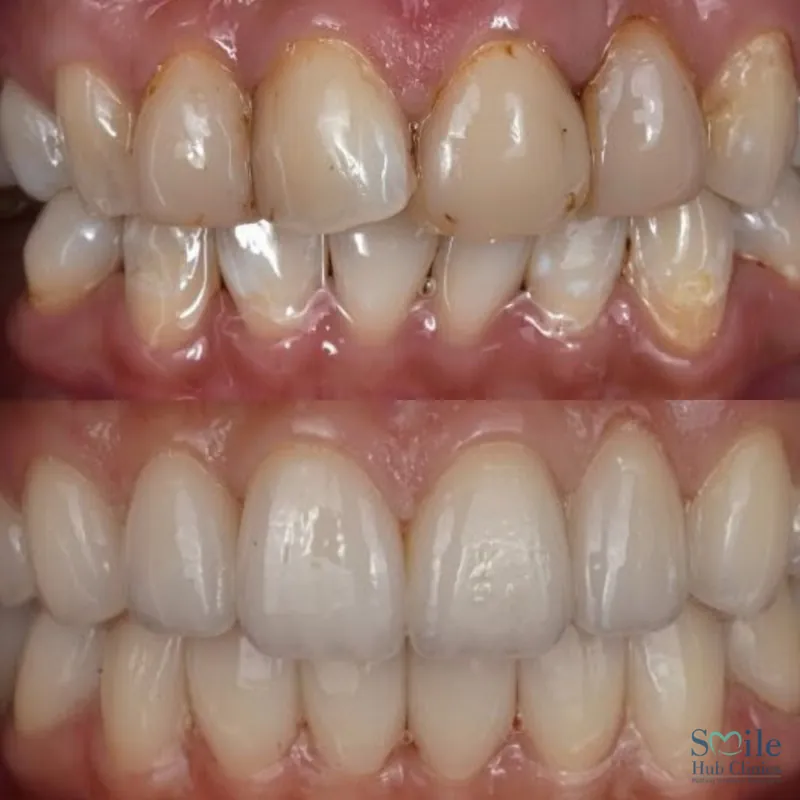
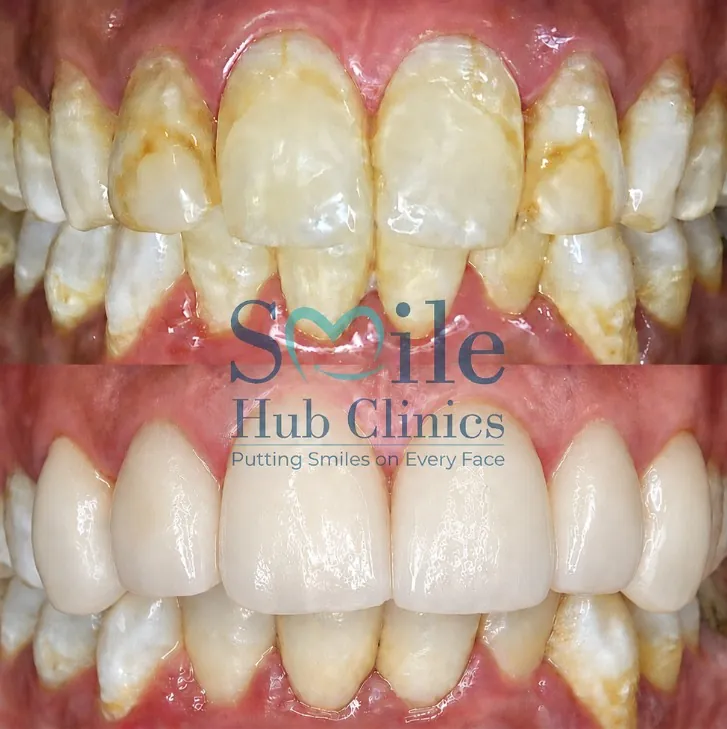
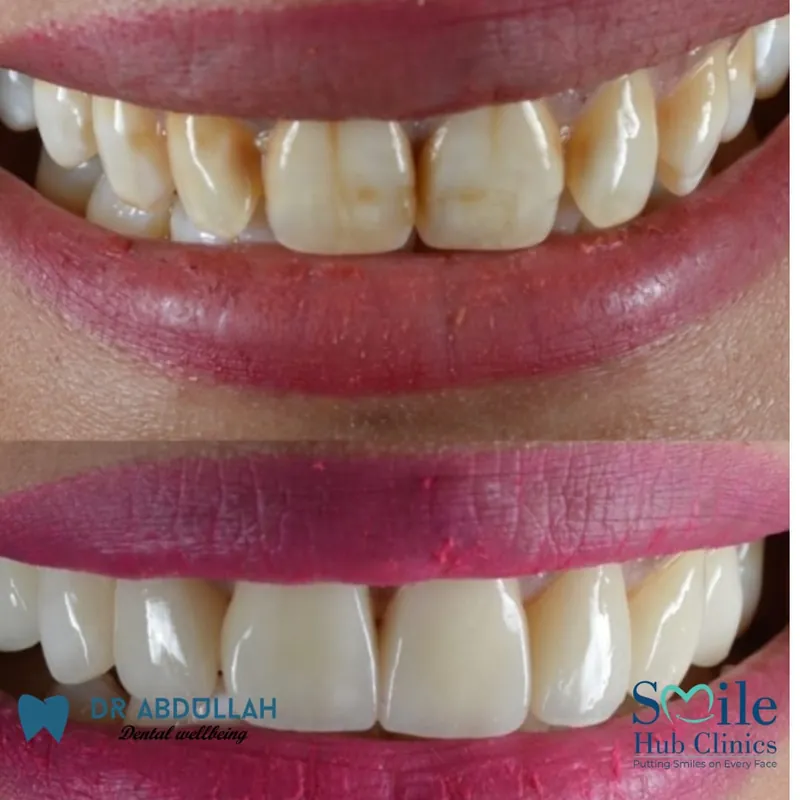
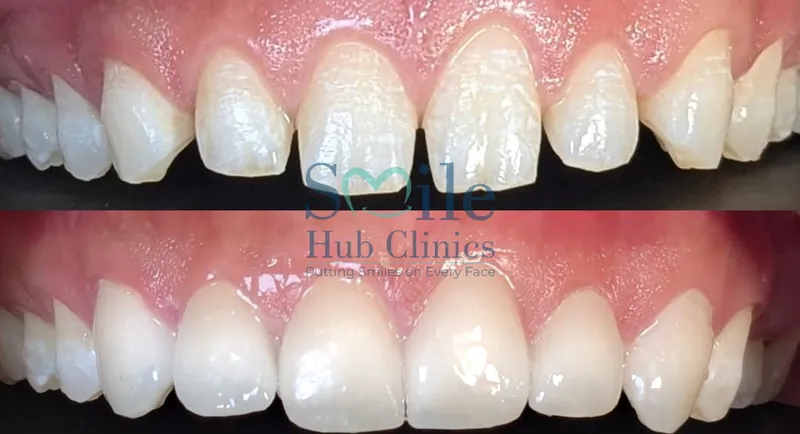
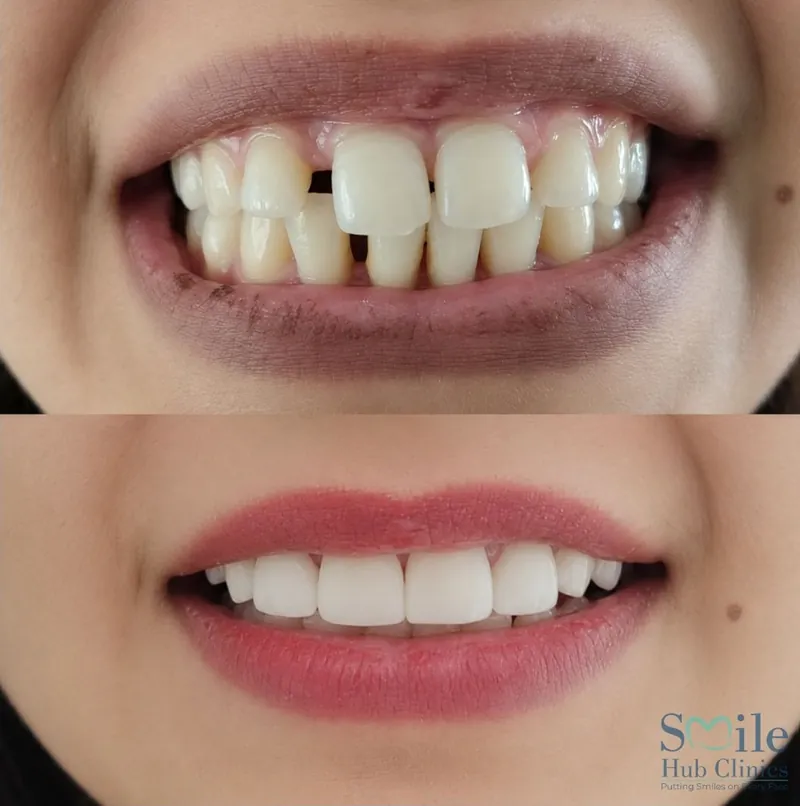
A few real before-and-after results from our cosmetic work. Every case is treatment-planned and bonded in-house by our prosthodontist.
View our full before & after gallery →